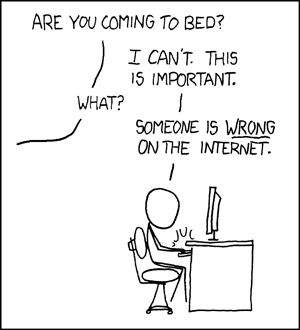
This week's question comes from one of my dancing friends and has to do with politely correcting someone's dance, although you can apply these tips to other art forms and knowledge as well:
Hey there! I'm not sure if you've addressed this or not but I thought it would be the perfect thing to ask you about for your blog.
I love belly dancing. I love all forms of it; it makes me happy like you would not believe. However I cannot stand when a person says "Oh the style I'm doing is ATS" when it is clearly cabaret or "I'm doing fusion" when it is, in essence, interpretive/modern dance. It drives me batty. I'd rather a person say "I'm doing cabaret and adding a bit of my own style into it" as opposed to saying something else.That being said, how do you provide feedback or constructive criticism to someone when they ask for it? You can't rightly say "your dancing was NOT type A" as that would be incredibly inappropriate.Help?
I'm glad you asked! This is a really important question because while oftentimes I'd tell you to just politely refuse to critique them by saying "I don't think I'm really qualified to critique you" or something along those lines, there's currently a great trend in the dance community of hosting salons where dancers bring their new works to be critiqued by each other, so you're going to be expected to politely express your opinion.
First and foremost, I always recommend using the "Criticism Sandwich" that I've discussed before on this blog. Make sure your complaints or questions about their stylistic choices are firmly sandwiched between two compliments about their technique, stage presence or musicality (try not to make one of the compliments be about their costume, as some dancers immediately take this to mean that their dance sucked and you can't think of one nice thing to say about it. The exception to this would be if you know they made the costume, you should compliment their hard work on that at some point).
Next, you have to decide how serious their infringement was and how qualified you are to address it. For instance, as a student of tribal fusion who is also enthusiastic about all bellydance styles, I enjoy watching Egyptian-style belly dance but I don't know enough about it to really explain what exactly makes something Egyptian and to call someone on it for not being very, well, Egyptian. I could have a deep gut feeling that what I just watched wasn't very authentic, but I wouldn't be able to back up my argument with facts. I'd just have to hope that someone with a strong background in that style would question the dancer's choice.
But if you are, for instance, an experienced ATS dancer and you see someone dancing something that doesn't include a single FCBD-approved move (or has just a couple moves sprinkled into an otherwise cabaret-inspired piece which looks suspiciously choreographed), you're in a good position to ask the dancer why she chose to call her dance ATS. Here's an imaginary conversation:
Her: Hey, what did you think of my dance?
You: It was nice! I was really impressed by how crisp your turns are. But I am a little confused as to why you called it an ATS performance? It didn't look like the ATS I'm used to.
(Note that at this point you've given her an open-faced criticism sandwich as you have to pause to let her answer your question)
Her: Oh well, I'm an American and I was dancing to a song that sounds really tribal and I felt like wearing a big skirt and drawing Berber tattoos on my face, so I felt like that made it American Tribal Style.
You: I see why you would think that, but actually ATS refers to a specific style <insert proper description here, phrased gently>.
Her: Thank you, I didn't know that!
You: No problem! And by the way, great shimmies. I look forward to seeing more from you in the future! (Now you've put that second slice of yummy bread on top of the meaty criticism)
As for the constant drift of fusion... That's a tricky one because everyone seems to have their own idea of how much bellydance there has to be in a dance for it to be still considered "tribal fusion", and everyone has their own opinion of which moves count as bellydance and which moves are shared by enough different styles of dance that they don't truly count unless you're using them with nothing but other bellydance. *sigh* It is true that sometimes in the pursuit of more artistic expression or excitement over a new technique she finally mastered in jazz class, a dancer might start to offer material that has little to no bellydance technique in it without consciously meaning to drift so far. They might think that what they're presenting is bellydance, because they still consider themselves a bellydancer and they still practice their bellydance technique, they just sort of forgot to put any of it in this particular choreography. Ooops.
The question is whether or not to address it? If you do, you run the risk of sounding like the Bellydance Police. My knee-jerk reaction to hearing "That's not bellydance!" is to say "Sure it is, it's just not what you're used to!" even if afterwards, when watching a video or replaying it in my mind later I realize that yeah, actually, that was 100% lyrical jazz without any bellydance in it.
Honestly, I think the occasional non-bellydance in an otherwise bellydance show is a little breath of fresh air and can provoke conversation, so if someone does it once and asks for your opinion, I'd let it slide and leave it up to the event promoter to address if they feel it wasn't bellydance enough for their event. But if it seems to be a trend with this particular performer, or with a large part of your community, bring it up casually. "I really liked your performance tonight but lately I've noticed that your work seems really heavily influenced by jazz/ballet/hiphop/clogging and I'm not seeing as much traditional bellydance. Are you changing your focus?" Don't make it seem like a bad thing, even if you don't like it. You may find that they were feeling a little burned out or constrained by bellydance, started exploring other directions, went a little astray and needed a friendly question to remind them to move back towards their roots.
The important thing is to have a gentle touch. Don't say "Your dance was NOT..." but make it more about opinions instead of facts. Try to avoid appearing to be a know-it-all or the style police, make the focus about making sure "the general public" doesn't get confused (when in doubt, always blame the poor, confused general public, they just don't understand that there are different styles of bellydance so we have to make everything really clear for them!).
I hope this helps!
If you have your own sticky situation, write me at Politelyworded@gmail.com and you could be featured soon!